In life, we meet many different people and build different types of relationships. These relationships may include romantic partners, friends, family members, colleagues, or other people we interact with regularly. While every relationship has misunderstandings and disagreements, some behaviors can be warning signs that should not be ignored. These warning signs are commonly known as red flags.
Red Flags you should never ignore
Red flags do not always mean that a person is completely bad. However, repeated unhealthy, disrespectful, manipulative, or harmful behavior can indicate a serious problem. Recognizing red flags early can help you protect your emotional well-being, maintain healthy boundaries, and make better decisions about the people you allow into your life. Here are some important red flags you should never ignore.
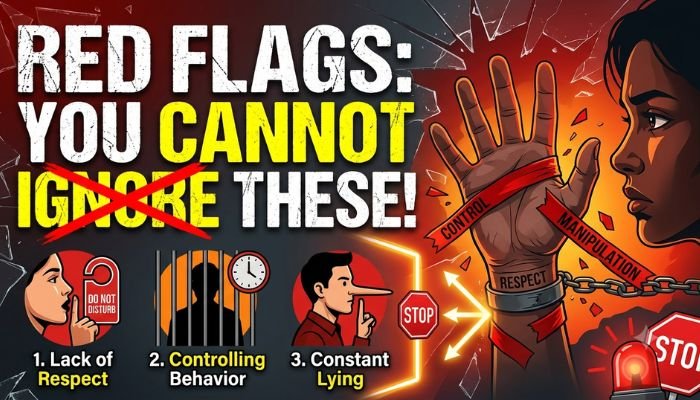
1. Lack of Respect
Respect is one of the most important foundations of any healthy relationship. Whether it is a friendship, romantic relationship, or professional connection, both people should feel valued and respected.
A lack of respect can appear in many ways. Someone may constantly make fun of you, dismiss your feelings, insult you, or make you feel that your opinions do not matter. Sometimes disrespect is hidden behind jokes, but if those jokes repeatedly hurt you, they should not simply be ignored.
Healthy relationships allow people to disagree without humiliating or disrespecting each other. If someone repeatedly crosses this line, it can be an important warning sign.
2. Controlling Behavior
Caring about someone and controlling someone are two very different things. A person who genuinely cares about you may offer advice and support your decisions. A controlling person, however, may try to make your decisions for you.
Controlling behavior can include telling you who you can talk to, where you can go, what you should wear, or how you should spend your time. They may constantly demand access to your phone or social media accounts and become angry when you want personal space.
A healthy relationship should allow both people to maintain their individuality. If someone constantly tries to control your choices, relationships, or lifestyle, it is a red flag that should not be ignored.
3. Constant Lying and Dishonesty
Trust is difficult to build and easy to break. Everyone can make mistakes, and one dishonest moment does not always define an entire person. However, repeated lying and dishonesty can slowly destroy trust.
Pay attention when someone regularly changes their stories, hides important information, or lies even when there is no clear reason to do so. When confronted, they may deny obvious facts or try to make you feel guilty for questioning them.
A healthy relationship requires honesty. If dishonesty becomes a repeated pattern, it can create confusion, insecurity, and emotional stress.
Read More : Instagram Bio Kaise Likhe | 5 Best Way Instagram Bio idea
4. Ignoring Your Boundaries
Personal boundaries are an important part of emotional and mental well-being. Everyone has the right to decide what makes them comfortable and what does not.
A major red flag is when someone repeatedly ignores your boundaries after you have clearly communicated them. This may include refusing to accept your “no,” invading your personal space, pressuring you into uncomfortable situations, or dismissing your feelings.
People who respect you may not always understand your boundaries immediately, but they should be willing to listen and make an effort to respect them. Repeatedly crossing clearly stated boundaries is not something that should be taken lightly.
5. Manipulation and Emotional Pressure
Manipulation can sometimes be difficult to recognize because it may happen gradually. A manipulative person may use guilt, fear, emotional pressure, or confusion to influence your decisions.
For example, they may make you feel responsible for their emotions or blame you for problems that are not your fault. They may also act like the victim whenever they are asked to take responsibility for their actions.
Over time, manipulation can make you doubt yourself and question your own decisions. A healthy relationship should make you feel comfortable expressing your thoughts, not constantly guilty or confused.
If someone regularly uses emotional pressure to control your choices, it is an important red flag.
6. Anger and Aggressive Behavior
Feeling angry is a normal human emotion. Everyone experiences frustration from time to time. However, the way a person handles anger can reveal a lot about their behavior and emotional maturity.
Constant shouting, intimidation, threats, aggressive behavior, or damaging things during arguments should never be considered normal communication. Even if a person apologizes afterward, repeated aggressive behavior can create an unhealthy and stressful environment.
Disagreements can happen in any relationship, but healthy communication should not make you constantly feel afraid or unsafe. Repeated aggression is a serious warning sign that should not be ignored.
Read More : Don’t Say Sorry Meaning in Hindi
7. Lack of Accountability
Everyone makes mistakes. What matters is how a person responds to those mistakes.
A person who never accepts responsibility and always blames others may show a lack of accountability. They may refuse to apologize, make excuses for harmful behavior, or repeatedly repeat the same mistakes without trying to change.
For example, if every disagreement somehow becomes your fault, even when you clearly have done nothing wrong, it may be time to look closely at the pattern.
Healthy relationships require both people to take responsibility for their actions. The ability to apologize, learn, and improve is an important sign of emotional maturity.
8. Trying to Isolate You From Others
Your relationships with friends and family are an important part of your support system. A person who genuinely cares about you should not constantly try to separate you from the people who support you.
Isolation may happen gradually. Someone may repeatedly criticize your friends or family, make you feel guilty for spending time with them, or create unnecessary conflict whenever you meet other people.
Over time, this behavior can leave you feeling dependent on only one person. Maintaining healthy connections outside of any relationship is important for emotional balance and personal independence.
If someone is actively trying to isolate you from the people you trust, it is a serious red flag.
9. When Words and Actions Do Not Match
Words can be powerful, but actions often reveal more about a person’s true intentions.
Someone may repeatedly promise to change, apologize for the same behavior, or say that they care about you. However, if their actions continue to hurt you, the words eventually lose their meaning.
For example, a person may say they respect you but repeatedly disrespect your boundaries. They may promise honesty but continue to lie. They may promise to change but repeat the same harmful behavior again and again.
Instead of focusing only on what someone says, pay attention to consistent behavior. Real change is usually visible through actions over time.
10. Constant Negativity and Criticism
Constructive feedback can help people grow, but constant criticism can slowly damage confidence and self-esteem.
A person who regularly points out your flaws, compares you to others, or makes you feel like you are never good enough may create an unhealthy emotional environment.
Supportive people can be honest with you without constantly making you feel small. Healthy relationships should encourage personal growth, not destroy your confidence.
If you constantly feel anxious, inadequate, or afraid of making mistakes around someone, it may be worth examining the relationship more carefully.
11. How to Recognize Red Flags Early
One of the best ways to recognize red flags is to pay attention to patterns rather than isolated incidents. Everyone can have a bad day or make a mistake, but repeated unhealthy behavior should not be ignored.
Listen to how you feel around the person. Do you usually feel respected, comfortable, and safe? Or do you often feel anxious, confused, guilty, or emotionally exhausted?
It can also be helpful to speak with someone you trust. Sometimes an outside perspective can help you recognize behavior that you may have become used to.
Most importantly, pay attention to actions. Consistent behavior often tells you more than repeated promises.
12. What Should You Do When You Notice a Red Flag?
Not every red flag requires the same response. The first step is to understand the situation clearly and look for repeated patterns.
If appropriate and safe, communicate your feelings and boundaries clearly. Explain what behavior is making you uncomfortable and observe whether the person respects your concerns.
You can also talk to a trusted friend, family member, or someone who can offer a balanced perspective. Do not feel pressured to ignore behavior simply because you care about the person.
Your emotional well-being and safety are important. If a relationship repeatedly makes you feel unsafe, controlled, or emotionally harmed, creating distance and seeking appropriate support can be an important step.
Conclusion
Recognizing red flags does not mean that you should expect perfection from everyone. Every person makes mistakes, and every relationship can experience disagreements. However, repeated patterns of disrespect, dishonesty, manipulation, control, aggression, and boundary violations should never be ignored.
Healthy relationships are built on trust, respect, honesty, communication, and emotional safety. Paying attention to warning signs can help you make better decisions and protect your well-being. Remember, you deserve relationships where you feel respected, valued, comfortable, and free to be yourself.
What are red flags in a relationship?
Red flags are warning signs that may indicate unhealthy, disrespectful, controlling, dishonest, or harmful behavior in a relationship. They can appear in romantic relationships, friendships, family relationships, and other personal connections.
What are the biggest red flags you should never ignore?
Some of the biggest red flags include repeated disrespect, controlling behavior, constant lying, manipulation, ignoring personal boundaries, aggressive behavior, lack of accountability, and attempts to isolate you from friends or family.
Can red flags appear in friendships?
Yes. Red flags are not limited to romantic relationships. Friendships can also involve manipulation, dishonesty, disrespect, jealousy, controlling behavior, and a lack of respect for personal boundaries.
What should you do when you notice a red flag?
Try to understand the situation and look for repeated patterns. If it is appropriate and safe, communicate your concerns and set clear boundaries. You can also seek advice from someone you trust. If the behavior is harmful or makes you feel unsafe, creating distance and seeking support may be important.